Uncertainty-Aware Fourier Ptychography
also called Differentiable FPM
Light: Science & Applications 14, 236 (2025)
Abstract
Fourier ptychography (FP) delivers wide field-of-view, high-resolution imaging, but its reliance on precise numerical forward models makes it vulnerable to physical uncertainties such as misalignment, optical aberrations, and data quality limitations. Conventional methods correct these issues separately – calibration for misalignment, pupil/probe recovery for aberrations, exposure or HDR techniques for data quality – and cannot address them jointly. We introduce Uncertainty-Aware FP (UA-FP), a fully differentiable framework that treats deterministic uncertainties (misalignment and optical aberrations) as optimizable parameters, while using differentiable optimization with domain-specific priors to handle stochastic uncertainties (noise and data quality limitations). UA-FP achieves superior reconstruction quality under challenging conditions, remaining robust with reduced sub-spectrum overlap and even low-bit sensor data, and extends FP’s use as a measurement tool for settings where precise alignment and calibration are impractical.
Reconstruction comparisons
The same measurements are reconstructed with Uncertainty-Aware Fourier Ptychography (UA-FP) and the ptychographic iterative engine (PIE).
Each comparison is followed by links to its measurements and reconstructions; Data and reconstructions describes the files.
Blood smear
Data source: public Fourier ptychography dataset by Pengming Song and Guoan Zheng (University of Connecticut), bloodsmear_green. 2×/0.1 NA objective, 532 nm LED, 15 × 15 LED array.
| UA-FP | 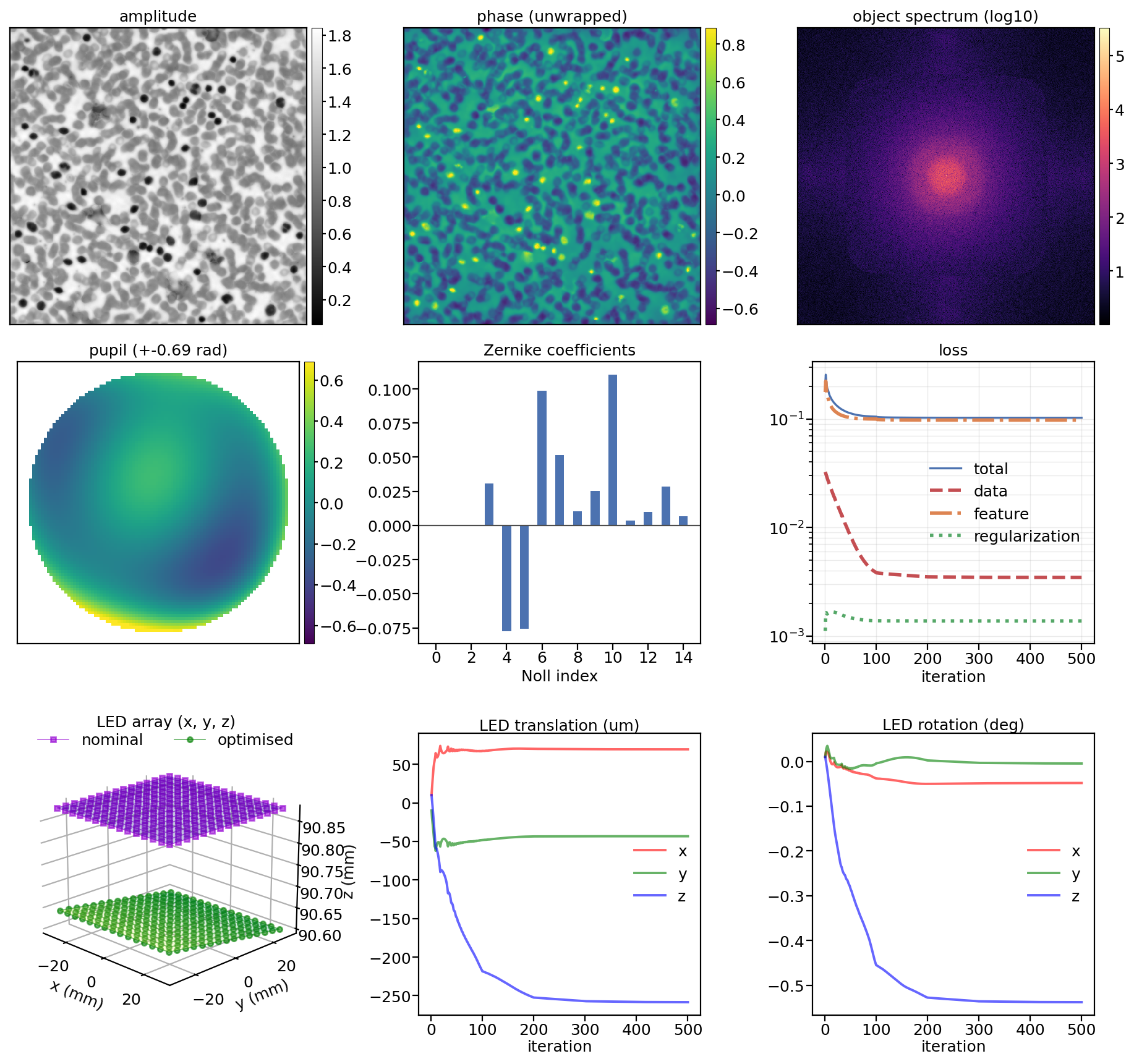 |
|---|---|
| PIE | 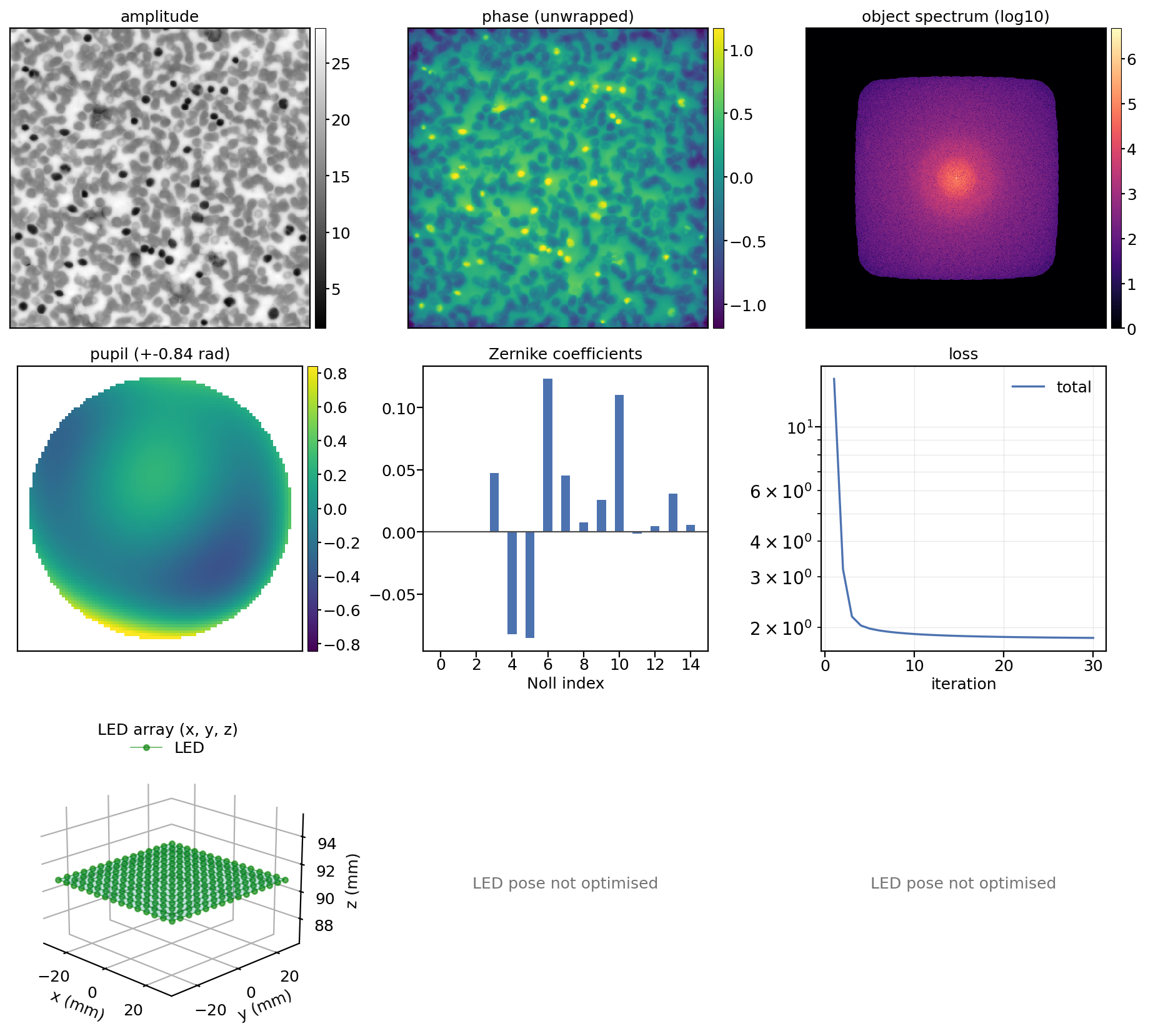 |
Download: original measurements · reconstructions (6.4 MB) · description
Low-quality USAF resolution target
Data used in the paper.
| UA-FP | 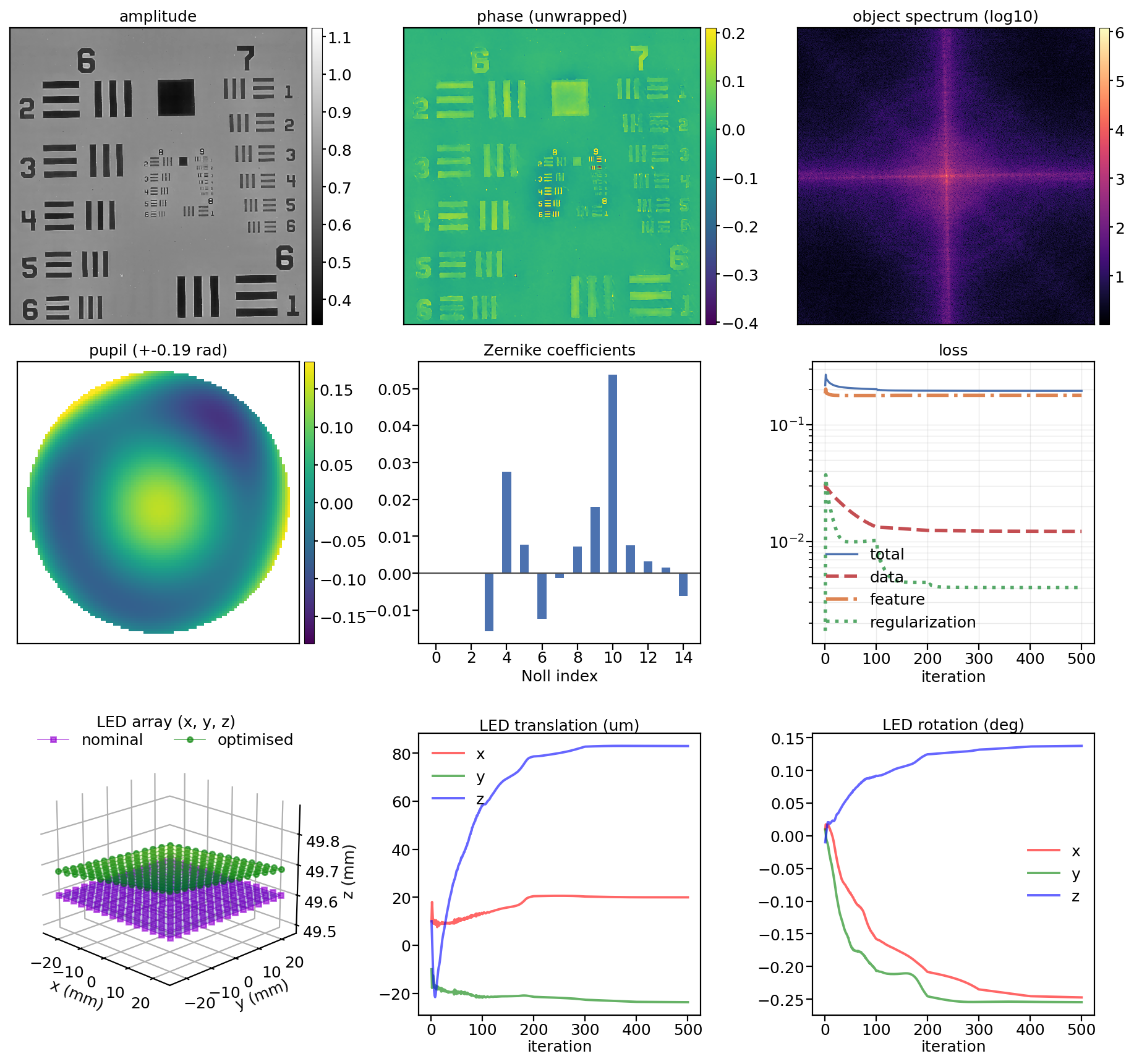 |
|---|---|
| PIE | 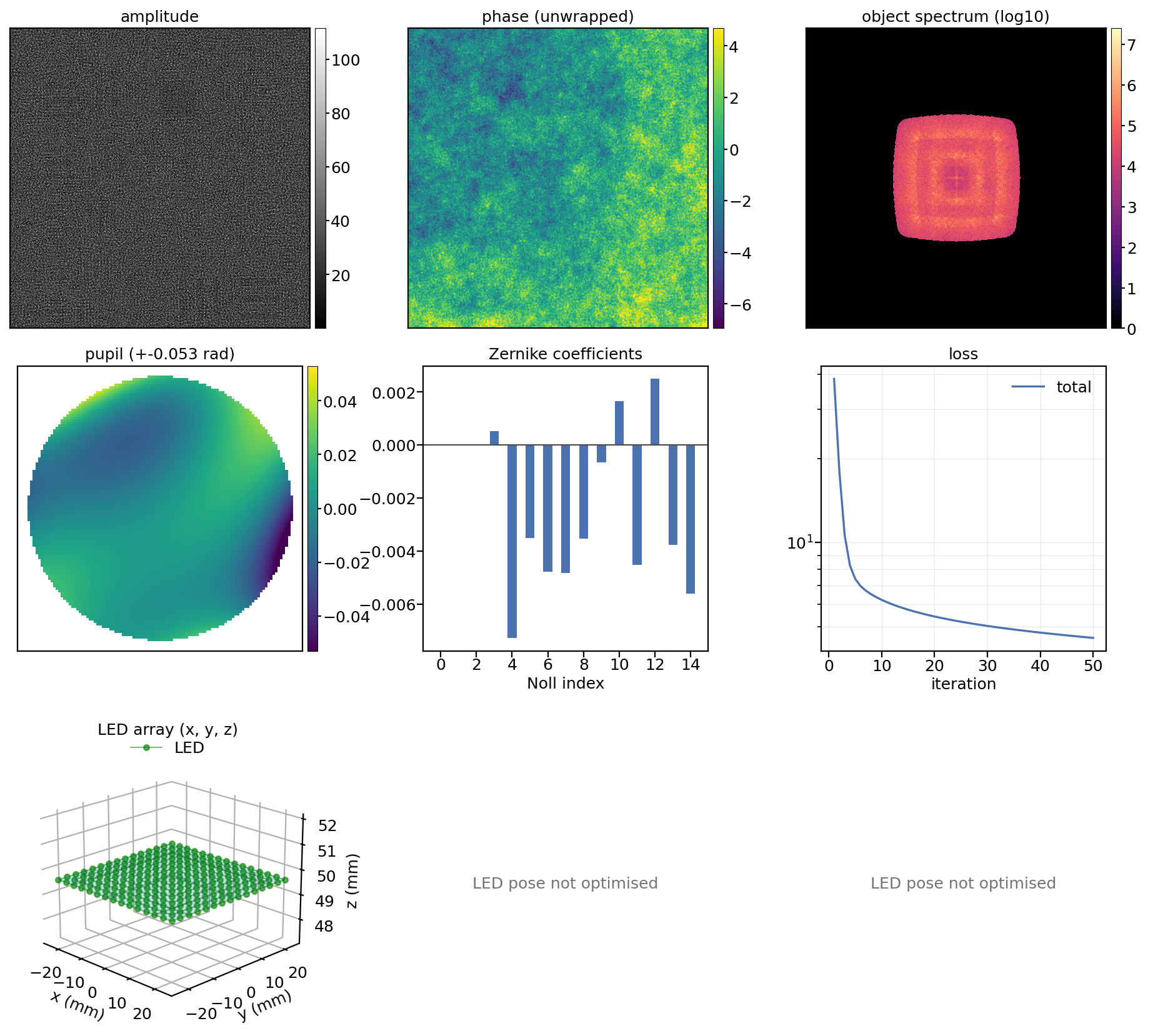 |
Download: measurements (4.4 MB) · reconstructions (26.8 MB) · description
Blood cells
| UA-FP | 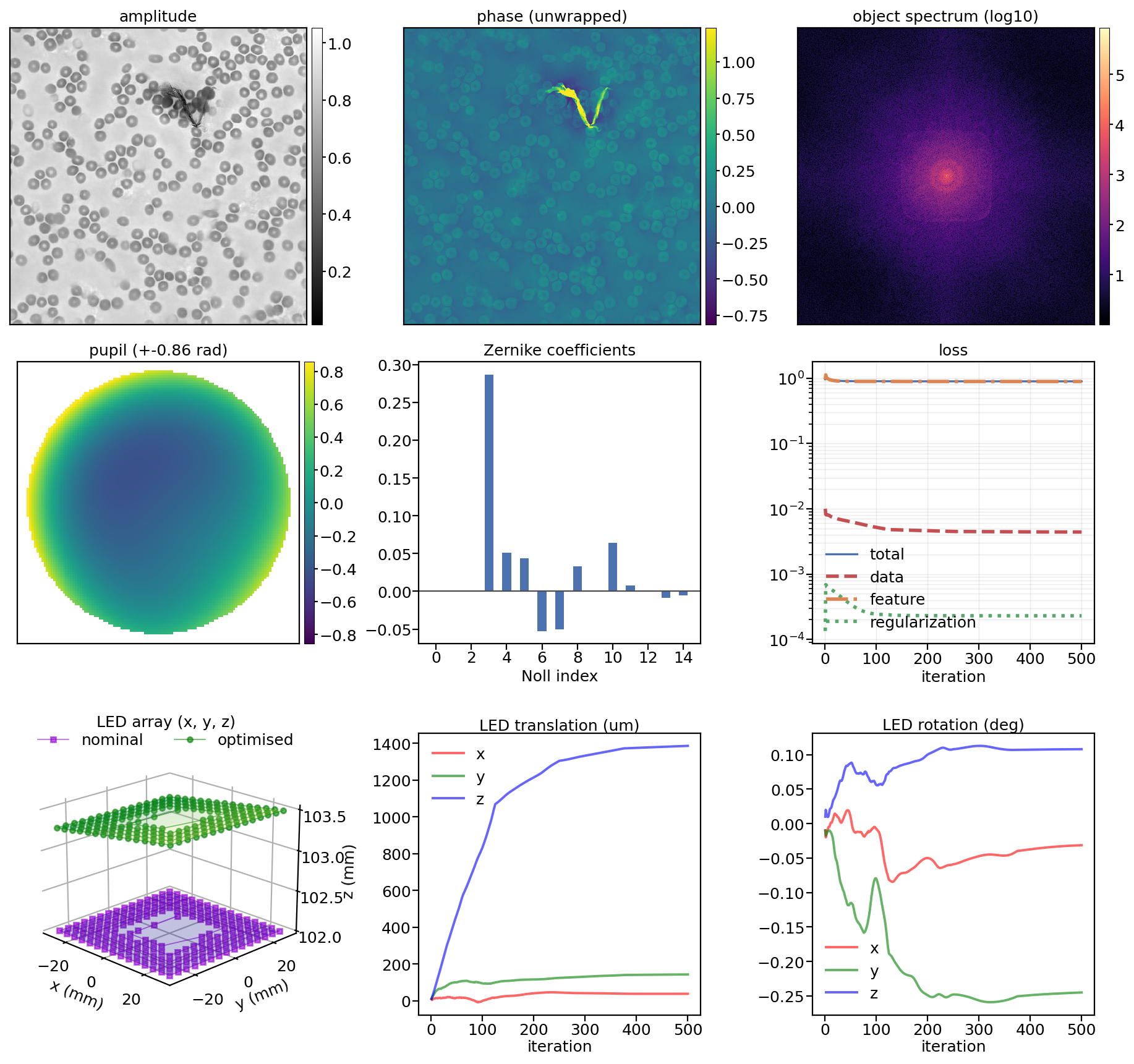 |
|---|---|
| PIE | 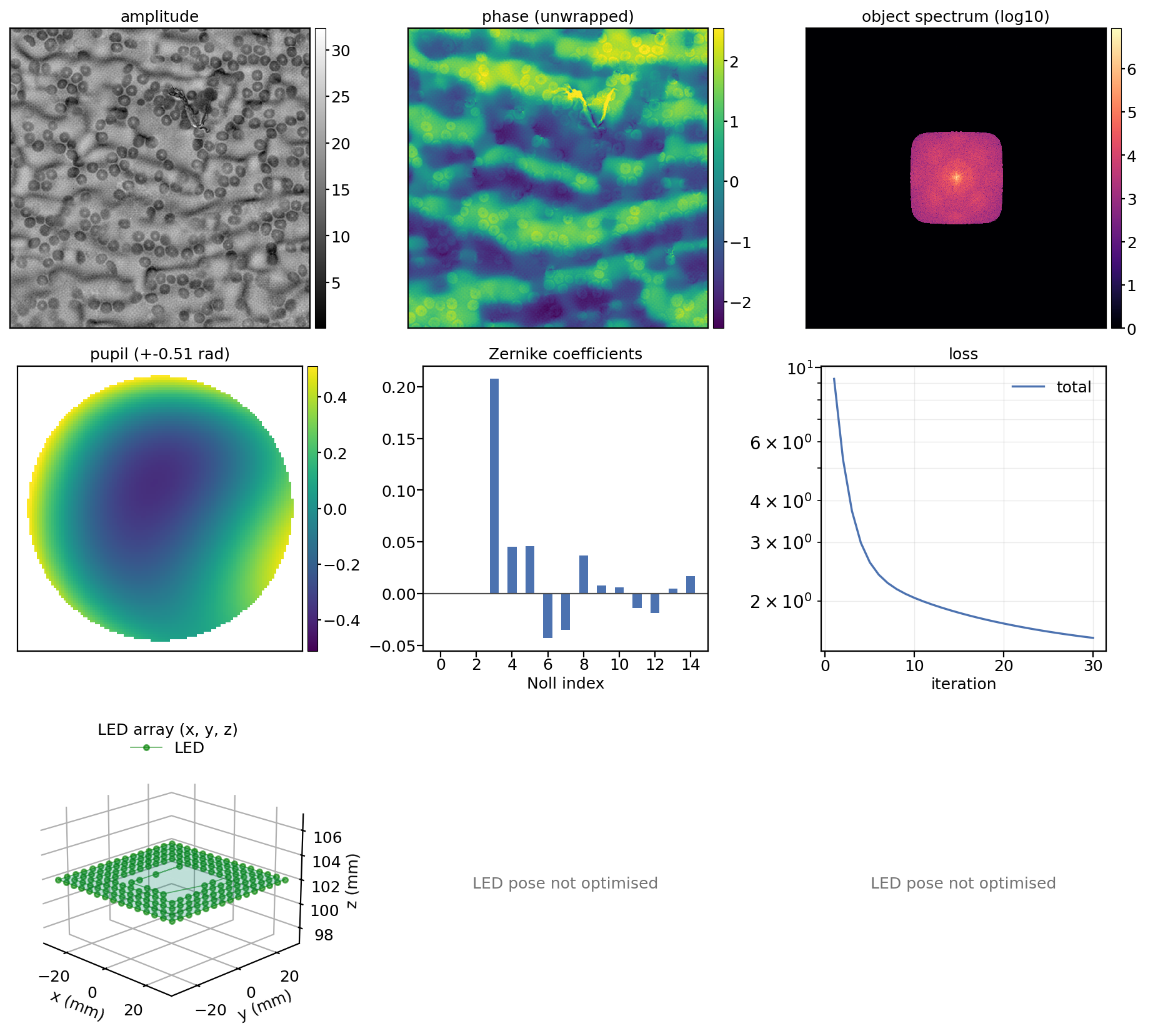 |
Download: measurements in six parts, 495 MB (1 2 3 4 5 6) · reconstructions (17.8 MB) · description
The code is not publicly available at this time. If you have data you would like reconstruct, please contact nichen.optics@gmail.com.
Bibtex
@article{Chen2025LSA,
  author     = {Ni Chen and Yang Wu and Chao Tan and Liangcai Cao and Jun Wang and Edmund Y. Lam},
  doi        = {10.1038/s41377-025-01915-w},
  ifactor    = LSA,
  journal    = {Light: Science \& Applications},
  month      = {7},
  number     = {1},
  pages      = {236},
  title      = {{Uncertainty-Aware Fourier Ptychography}},
  volume     = {14},
  year       = {2025},
}